

What’s the most wonderful feeling in the whole world? Bringing home a puppy, that’s what! Becoming a puppy parent is one of life’s true pleasures. Though, when the time comes to bring home a new puppy, there are quite a few potential challenges to consider and some essential items you’ll need to have on hand.
If you’re about to bring home your new best friend, you’ve come to the right place. By the end of this article, you’ll be armed with all the tips you’ll need to get you and your new bundle of joy through a painless first night. We’ll also throw in some guidance on how to train your puppy, including how to stop a puppy from biting and how to potty train a puppy.
This article will run you through the puppy essentials you can purchase ahead of time to make sure you’re prepared for your new furry friend, as well as the best food for puppies. We’ll also go over the delicate task of introducing a new puppy to your other dogs or cats at home.
You’ve got an exciting challenge ahead, so let’s get prepared for everything needed to set yourself up for a fantastic first night with your new puppy!
Puppy Essentials: Everything You’ll Need for the First Night
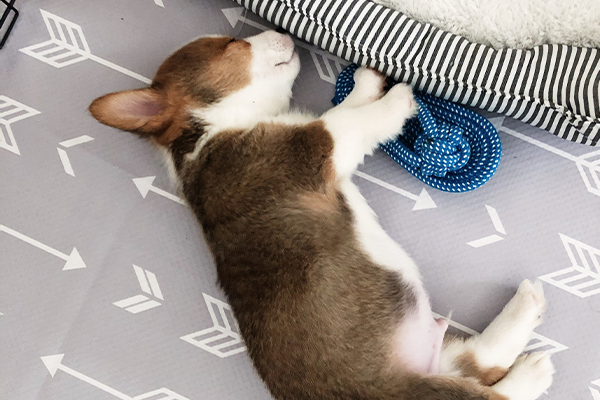
Before you even think about bringing home that glorious little fluffball, you’ll need a few items for your pup’s first night. Some first-time puppy owners may feel a bed, crate, food and water bowls are enough. However, if you want to be a bit more prepared, we suggest a few additional tools that will help for a puppy’s first night in a new home. These include:
- A cosy blanket to go in the crate or dog bed for your pup to sleep on
- Toys to help keep your puppy entertained and distracted from any potential separation anxiety (chew toys are also helpful to discourage chewing on furniture or other household items)
- Puppy pads if the puppy is not yet housebroken
- Cleaning supplies for those inevitable accidents (white vinegar diluted with warm water should work for most floors and carpets)
- Lead and collar or harness (if the puppy is old enough to go on walks)
- A brush – depending on the breed, a brush will help keep the puppy’s coat clean and free of tangles
- High-quality puppy food and treats
Best Food for Puppies
The best diet for puppies is high in protein and fat and low in carbohydrates. Puppy food should be meat-based, such as chicken or lamb. Look for high-quality puppy food at a specialised pet store, and be sure to get one that’s suited to your puppy’s age and breed.
While you’re picking up puppy food for the first night, don’t forget puppy treats! There are many types of puppy treats on the market, so just try to find ones with more actual meat ingredients and fewer preservatives and sugar. Some puppies prefer soft and chewy treats, while others go crazy for crunchy ones. You may need to experiment with a few different kinds before you find the perfect fit for your furry friend. Your puppy will also need plenty of fresh water to drink.
How to Introduce a Puppy to Your Dog
If you already have a dog, you’ll need to take some extra precautions when bringing home your new puppy. When introducing a new puppy to your dog, it is important to do so in a calm and controlled environment. You should have the two meet on neutral ground, such as in a nearby park or your backyard. Allow them to sniff each other (this will help them get used to each other’s scent) and get acquainted with one another before letting them interact. Once they seem comfortable, you can let them play together under supervision.
Some other good methods to use when introducing a new puppy to your dog are as follows:
- Start with short, supervised sessions where you can keep an eye on both your dog and puppy. You can gradually increase their time together if they seem to get along well.
- Give each dog plenty of attention and praise during these first sessions so that they associate being around each other with positive experiences.
- Keep up with your dog’s routine as much as possible during this transition. This will help reduce any stress or anxiety they may feel about the new addition to the family.
- Be ready to separate the dogs if they start fighting or playing too roughly. You may need to do this several times until they get used to each other’s limits.
If it’s not love at first sight for your dog and new pup, don’t worry, one of them might just need a bit more time to get used to their new family member.
How to Introduce a Puppy to a Cat
If you’re a cat owner, introducing your new pup will be a slightly different experience than with a dog. All cats have unique personalities, and some will be more tolerant of dogs than others. Nonetheless, we have gathered some useful strategies for a best-case kitty/pup meeting scenario:
- At the start, let the puppy and cat sniff each other from a distance before allowing them to interact
- Start with short supervised sessions where you can closely monitor their behaviour around each other
- Keep mealtimes separate so that there is no competition over food and water bowls
- Provide plenty of toys and playtime for both the puppy and cat to help tire them out before bedtime.
Like with an existing dog, sometimes your cat and new puppy won’t be best friends at first. Don’t let this discourage you. Your kitty and pup should start relaxing around each other after some time. Before you know it, you might catch them snuggling on the couch as the best of friends.
How to Settle a Puppy at Night: Puppy Bedtime Routine
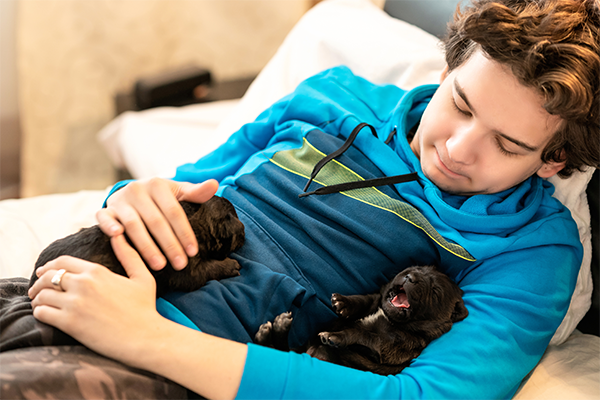
As a new puppy owner, you’ll soon learn that a nighttime routine is crucial. This is so both you and your pup can have a peaceful night’s sleep. The best way to get your puppy used to a bedtime routine is to train them from a young age. As part of your puppy bedtime routine:
- Give them a designated sleeping area in your room or house. This could be their crate, dog bed, or even an old blanket.
- Put their food and water bowl near their sleeping area, so they know where it is when they wake up.
- Every night before bed, take your puppy out for one last potty break.
- Put them in their sleeping area and say goodnight.
- You may want to give them a toy or treat to keep them occupied while you’re asleep.
- Whatever you do, try not to get them riled up or excited before bed. Ideally, you will be able to wind them down in the hours leading up to bedtime.
How to Train Your Puppy
With a new puppy in the house, you’ll quickly learn that there’s much work to do in the way of training. You could read about this topic for hours, but here we will briefly outline some of the best training tips when introducing your new puppy to your home.
The easiest way to train a puppy is by using positive reinforcement. This means rewarding your puppy when they display the desired behaviour and ignoring them or redirecting their attention when they do something you don’t want them to do. For example, if you are potty training your puppy and they go outside to relieve themselves, give them lots of praise and maybe even a treat, so they know they’ve done something good. On the other hand, if your puppy has an accident indoors, simply clean it up without making a big fuss. Your puppy will quickly learn what is expected by consistently rewarding desired behaviours and ignoring undesired ones.
How to Stop a Puppy Biting
When a puppy first comes home, they will likely display various unwanted behaviours. One of the most unpleasant ones is biting. Many puppies don’t know their strength nor when play biting becomes aggressive. If you are finding that your puppy is biting more than you would like, there are a few things that you can do to help stop this behaviour.
First, it is important to understand why puppies bite. Puppies engage in biting and mouthing behaviours for various reasons, including teething, playing, investigating their environment, or releasing excess energy. While some biting is normal and part of puppyhood, it is time to take action if the bites are becoming too hard or causing pain.
Here are some tips for stopping your puppy from biting:
-
- Do not encourage biting by playing games such as tug-of-war, which can fuel a pup’s natural predatory instincts. Instead, opt for non-aggressive play, such as fetch or chase, where no one gets hurt.
- If your pup mouths or bites you during playtime, immediately end the game and walk away, so they learn that these types of behaviours lead to an abrupt ending of fun activities. It is also important not to scold or punish them at this time, as it could just make matters worse by confusing them or leading to further aggression. Simply saying “no” firmly while walking away calmly will do. Try again later with another short round of play once they have calmed down entirely before progressing onto longer sessions.
- Offer chew toys designed for teething pups which can provide much-needed relief without damaging furniture or injuring anyone. Be sure to supervise when giving them these items, so they don’t become potential choking hazards (try to replace them often, so they don’t get bored and start chewing on other things instead).
- Never offer your hands or feet as substitutes for chew toys since this sends mixed signals about what exactly is okay.
How to Potty Train a Puppy
One of the very first focuses when bringing a new puppy home is potty training. For the love of your sanity and your floors and carpet, this is a task you want to get right as soon as possible. The most helpful thing to do is to create a house training schedule that works for you and your pup. Then stick with it and be consistent.
Puppy potty training is a big job and will take lots of patience. For more detailed information, including a variety of tips and tricks on potty training a puppy, check out our article here.
Are you surprised about the responsibilities related to your first night with a new puppy? We can assure you that the joys of being a puppy parent will outweigh the challenges. The most important thing to remember when bringing home a new puppy is to be prepared & to set good routines from the very first night you spend together.
There are many tools you’ll need to have on hand, including food, toys, and cleaning supplies. You’ll also need to carefully introduce your new pup to other household pets. Finally, starting a bedtime routine early on is important so that you and your pup can get a good night’s sleep! With time, patience and training, you’ll undoubtedly have a well-behaved puppy. Good luck, and enjoy introducing your new furry family member to their furever home.